University of Washington Wins Big Ten Soccer Title Days After Goalkeeper Mia Hamant’s Death at 21
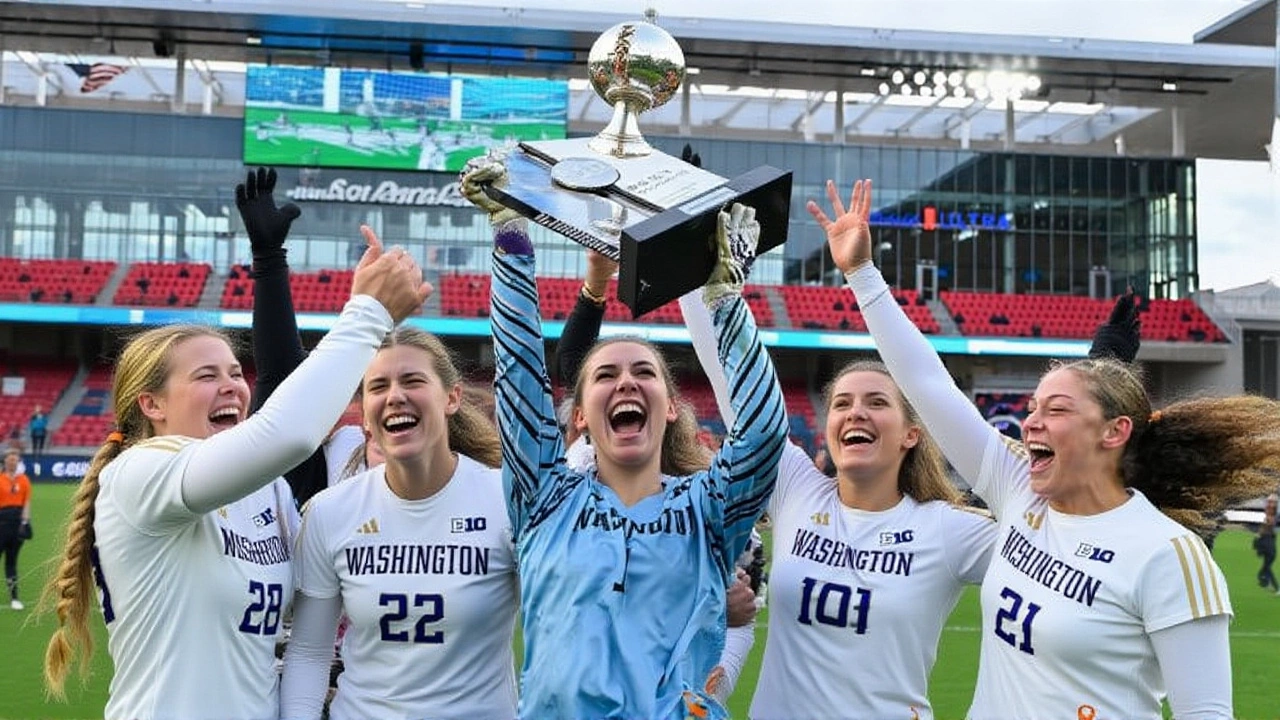
Just days after losing their 21-year-old goalkeeper, Mia Hamant, to a rare and aggressive form of stage 4 kidney cancer, the University of Washington women’s soccer team lifted the Big Ten Tournament Championship trophy in a performance that left fans and rivals alike in tears. The victory, sealed on November 10, 2025, at Columbus, Ohio, wasn’t just a win—it was a tribute. The Huskies, who joined the Big Ten just last year on August 2, 2024, earned an automatic bid to the NCAA Division I Women’s Soccer Tournament, with their first-round match scheduled for November 17, 2025. But the real story wasn’t on the scoreboard. It was in the silence between whistles, in the way teammates touched their jerseys over their hearts, and in the unspoken understanding that Hamant was still with them.
A Team Playing for More Than Points
When Mia Hamant passed away on November 6, 2025, the University of Washington athletics department released a statement confirming she’d battled a subtype of kidney cancer so rare, even specialists called it ‘uncommonly aggressive.’ Her prognosis, officials said, followed the typical path—rapid, relentless, and heartbreaking. She was 21. A junior. A starter. One of the Big Ten’s top goalkeepers in 2024, according to ESPN. Her jersey number, 13, was quietly retired by the team that same day. No announcement. No press conference. Just a note taped to the locker room door: ‘We play for her.’
Three days later, the Huskies faced Ohio State in the tournament final. The stadium was packed. Fans wore #13 stickers. Opponents bowed their heads as Hamant’s name was read aloud before kickoff. And then, the game began. No speeches. No banners. Just 11 women playing like their lives depended on it. They won 2-1. The final goal came in the 87th minute—a header off a corner kick. The team didn’t celebrate. They ran straight to the sideline, where Hamant’s gloves and cleats sat under a folded jersey. One player, Kelsey Branson, a midfielder who played alongside Hamant for three seasons, dropped to her knees and kissed the grass. ‘She was just in love with the game,’ Branson told KOMO News. ‘I really admired her for that.’
The Coach Who Held Them Together
Nicole Van Dyke, the head coach since 2021, didn’t give a postgame interview. Instead, she walked to the center of the field, knelt, and placed a single white rose on the penalty spot. Later, in a quiet locker room, she told her team: ‘She was an exceptional teammate, roommate, and friend.’ Those weren’t just words. They were the foundation of the season. Van Dyke had spent weeks adjusting practices, letting players take days off without penalty, allowing tears during film sessions. She didn’t push them to be strong. She let them be human.
What made this season different wasn’t just the talent—it was the quiet resilience. Hamant had been diagnosed in March 2025, just before spring training. She missed four games that spring, returned for the final two, and kept training even as her energy faded. Teammates say she’d show up at 6 a.m. to watch film alone. ‘She’d say, ‘I’m not leaving until I know every angle,’’ recalled backup goalkeeper Jordan Lee. ‘She didn’t want to let us down.’
A Legacy Beyond the Field
The University of Washington, founded in 1861 and located in Seattle, has fielded a women’s soccer program since 1984. But this season will be remembered not for wins or rankings, but for how grief and grace collided. The NCAA tournament will now be a living memorial. Officials confirmed that Hamant’s name will be displayed on the team’s bench, her jersey number displayed on the field’s center circle, and a moment of silence held before every match. A fund in her name, the Mia Hamant Legacy Initiative, has already raised over $2.3 million to support young athletes with rare cancers—money that will go toward early screening programs and psychological support for families.
Her story has rippled beyond Seattle. The Big Ten Conference announced it will establish an annual award in her honor, given to the player who demonstrates ‘exceptional courage and commitment despite adversity.’ The NCAA is reviewing protocols for student-athletes with life-threatening illnesses, especially those who choose to compete while undergoing treatment.
What Comes Next
The Huskies’ first NCAA tournament match is set for November 17, 2025, at a yet-to-be-announced venue. They’ll face a top-seeded team from the Pac-12—ironically, the conference they left just last year. But this isn’t about rivalry anymore. It’s about legacy. Coach Van Dyke said she won’t tell her players how to feel. ‘If they need to cry before the game, cry,’ she said. ‘If they need to smile, smile. Mia wouldn’t want us to be anything but ourselves.’
On the team’s official Instagram, a photo from October 2025 shows Hamant mid-save, arms outstretched, eyes wide with focus. The caption reads: ‘She didn’t just guard the net. She guarded our hearts.’
Frequently Asked Questions
How did Mia Hamant’s cancer diagnosis impact her playing time?
Mia Hamant was diagnosed with a rare, aggressive subtype of stage 4 kidney cancer in March 2025, just before spring training. She missed four games that season but returned to play the final two, often training before dawn and watching film alone. Teammates say she refused to let her illness define her role, insisting on being part of every practice and meeting—even when she was too weak to stand.
Why is this win considered more than just a sports achievement?
This win transcends sports because it came after the sudden death of a beloved teammate who battled a terminal illness while still competing at a high level. The team’s decision to dedicate the championship to Hamant, and the emotional response from fans and opponents alike, turned the tournament into a national moment of mourning and admiration for resilience in the face of tragedy.
What is being done to honor Mia Hamant beyond the team?
The Big Ten Conference will create the Mia Hamant Courage Award, given annually to a student-athlete who shows exceptional perseverance through illness. The NCAA is reviewing policies on athletes competing with terminal diagnoses, and a $2.3 million fund in her name will support early cancer screenings and mental health resources for young athletes and their families.
Was Mia Hamant’s cancer type common among athletes?
No—her subtype of stage 4 kidney cancer is exceptionally rare, particularly in young adults. According to University of Washington Athletics, fewer than 12 cases have been documented in athletes under 25 in the past decade. Its aggressive nature and lack of early symptoms make it difficult to detect, which is why the new fund aims to increase awareness and screening in collegiate sports.
How has the University of Washington responded to the tragedy?
The university has offered counseling to all student-athletes and staff, temporarily paused media requests, and is working with Hamant’s family to establish a permanent memorial at the soccer stadium. Her jersey number, 13, will be displayed on the team’s bench for the remainder of the season and beyond, and the university plans to host an annual ‘Hamant Day’ to celebrate student-athletes who overcome adversity.
What’s next for the University of Washington women’s soccer team?
They’ll play their first NCAA tournament match on November 17, 2025, against a top-seeded Pac-12 opponent. The team has said they won’t change their approach—just carry Hamant with them. Every goal, every save, every moment on the field will be for her. As one player put it: ‘We’re not playing to win for her. We’re playing because she taught us how to live.’
- November 23, 2025
- Darius Beaumont
- 0 Comments
- Permalink